From Poking Slime Blobs to Building Games (And Apparently an Entire Game Engine While I’m At It)
A solo dev with four kids built a slime clicker game for his sons, then created an entire game framework to ship faster. Meet the tinkerer behind Blobby and the SDK powering his next games.
By JonBrawn · June 18, 2026
By: JonBrawn
I’m a father of four, a full-time maintenance engineer, and someone who apparently doesn’t need sleep. I’ve always been a tinkerer. Mechanical stuff, construction, code — if there’s a problem and a way to build something that solves it, I’m in. Programming started as a hobby. A creative outlet. A way to shut my brain off by pointing it at something interesting. Healthy coping mechanism? Debatable. Does it work? Absolutely.
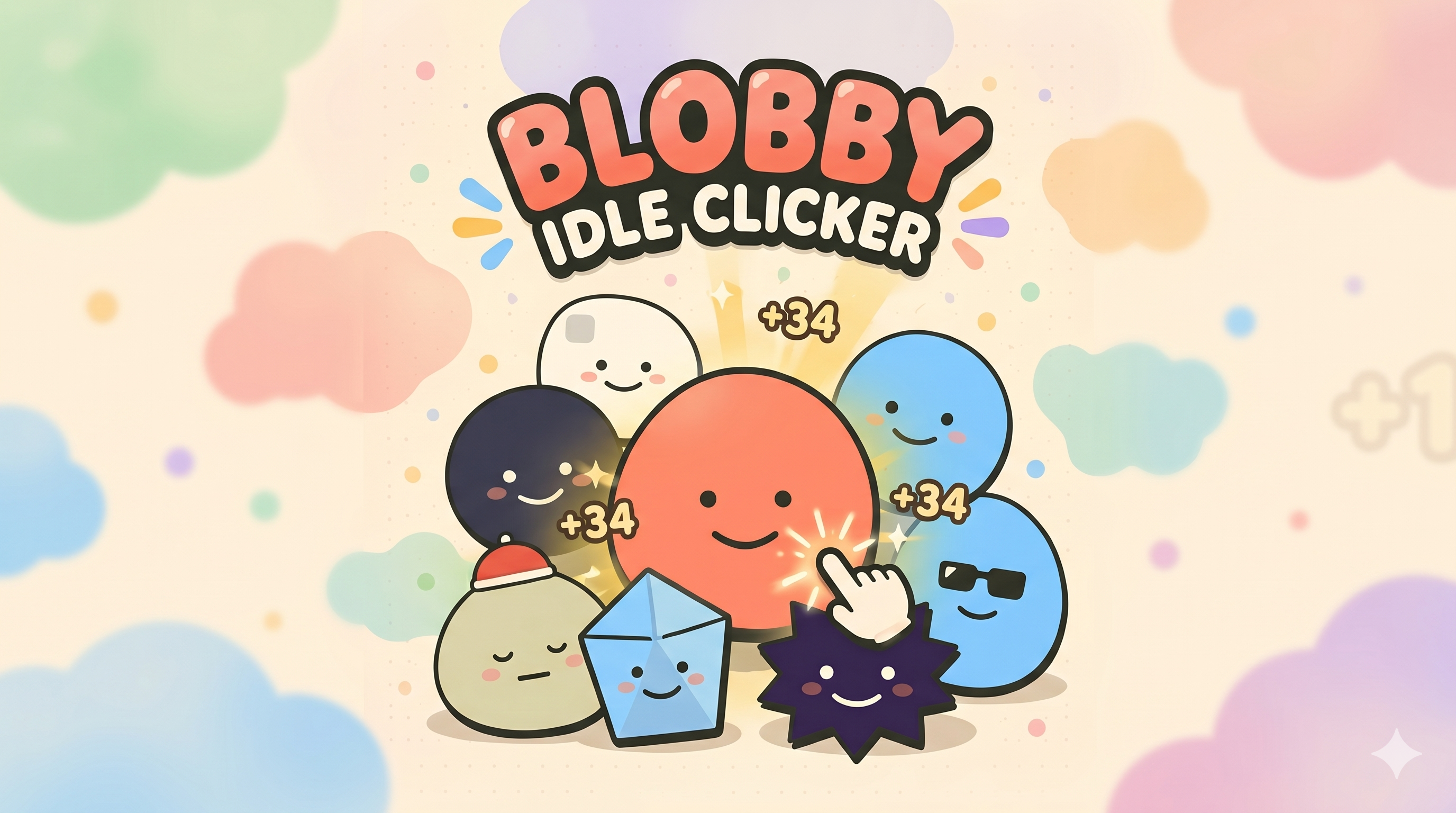
Blobby Clicker started because of my kids, the way most chaotic things in my life do.
My sons were talking about Cookie Clicker one day, and because they know I’m always building something, they hit me with the obvious question: “Why don’t you make one?” Reasonable ask. So I did what any responsible adult would do and immediately started building a cookie clicker clone at midnight.
The character itself came from my youngest, who was three at the time. I asked what he wanted in the game. Without hesitation, with the energy of a tiny general who had been planning this his entire 36 months of life:
“SLIME BLOBBIES!”
John Wick in a diaper. Maybe 1’6” tall. Absolute conviction. No notes.
Kid’s got vision. I respect it. Blobby was born.
The first version was… look, it existed. That’s the nicest thing I can say. Inputs felt laggy, no haptic feedback, the balancing was all over the place, and the visuals were doing their best. But my kids could play it, it made them happy, and that was the whole point. I published it on RUN because I needed somewhere my kids could pull it up on their phones without me having to build a full authentication system and backend infrastructure just to serve a slime blob game to three boys who would probably stop playing it in two weeks anyway.
Zero expectations. Genuinely zero.
Then people actually started playing it. Which was unexpected.
Through the platform I started learning things I didn’t know I needed to learn — how leaderboards affect player behavior, how progression systems actually feel to someone who isn’t me, how to read feedback without either ignoring it completely or letting it completely derail what I was building. The RUN platform let me skip past the part of indie dev that usually kills momentum — standing up infrastructure, auth systems, backend services — and get straight to the thing I actually care about: building the game. That’s not a small thing. For a solo developer with a full-time job and four kids, being able to skip three months of backend work is the difference between shipping something and having another abandoned GitHub repo.
But here’s the thing about tinkerers: we don’t stop.
Blobby taught me that I could actually build games people enjoy. So naturally, my response was to immediately start building four more games and also an entire game framework. Because why have one problem when you can have seventeen?
Here’s where it gets a little nuts.
After Blobby, I wanted to build more games. Four more, specifically. Different styles, different mechanics, different ideas. And that’s when I ran headfirst into the part nobody talks about in the “solo indie dev” fantasy: you don’t just build a game. You build a game, and a UI system, and a backend integration, and an asset pipeline, and a component library, and approximately forty other things that have nothing to do with the actual game you sat down to make. Every new project meant starting that whole pile over from scratch. I have a full-time job and four kids. I do not have time to reinvent the same wheel six times. Something had to give.
But here’s the actual why — the thing I kept hitting my head on.
Game UI is a nightmare to keep consistent across devices. The standard answer is responsive design: media queries, breakpoints, layout shifts. That works great for websites. For games, it means your carefully designed interface looks completely different at every resolution and you spend half your time chasing layout bugs instead of, you know, making the game. I didn’t want to chase layout bugs. I wanted to build games. So I built a UIManager system that defines a fixed view area and positions everything absolutely within it — scaling identically across every device the way Godot or Phaser would handle it — but it’s still 100% Svelte components, still reactive, still emits bus events, still lets you use Tailwind where you need it. One applyDecorKit() call swaps your entire visual theme via CSS variables. Think shadcn or daisyUI, but built for games, with full theming and zero rewrites.
That UI layer sits on top of a logical SDK currently at 197 components — abilities, combat, inventory, entity management, modifier pipelines, loot tables, event bus, registry systems, and more. The backend is wrapped behind an adapter layer so the game itself doesn’t care if it’s talking to RUN.game or something else. Swap a config value. Done. And there’s Forge Vault, my internal asset pipeline for managing the hundreds of gigabytes of sprites, tilesets, 3D models, textures, and sound files living on a dedicated NVMe SSD — because at some point that became a thing I needed.
The point of all of it is this: once the framework is solid, a new game shouldn’t mean rebuilding plumbing. It should mean defining what makes this game unique and dropping it into something that already works. Building with Legos instead of mining the ore, smelting the metal, and hand-carving every brick myself.
I have four games in various stages of design beyond Blobby. Every project teaches me something new, and every release makes the next one faster to ship.
At the end of the day, my goal is still the same one I had when a tiny, extremely serious toddler yelled “SLIME BLOBBIES!” at me like it was a military directive: build things that make people happy. Everything else — the framework, the SDK, the asset pipeline, the ungodly NVMe full of game assets — is just me making sure I can actually do that without losing my mind in the process.
I don’t sleep anyway. And if I’m being honest, that same kid has been asking about the next Blobby update with that exact same energy ever since. Some generals never stand down.